Formation Self Defense Train Smart. Stay Safe. Fight Back.

Formation Self Defense

Train Smart. Stay Safe. Fight Back.

Latest Articles

After the Dust Settles: How the 72 Hours Following a Self-Defense Incident Can Define Your Legal Future
Safety & Awareness

After the Dust Settles: How the 72 Hours Following a Self-Defense Incident Can Define Your Legal Future

Executing a technique correctly may protect you in the moment, but what you do in the three days that follow can determine whether that same act is viewed as justified self-defense or criminal conduct. From medical documentation to witness preservation, the post-incident window is a legal battleground most practitioners never prepare for. Formation Self Defense breaks down exactly what needs to happen—and when.


Hardwired to Be Fooled: How Your Brain's Mimicry System Can Work Against You in Dangerous Situations
Training Methods

Hardwired to Be Fooled: How Your Brain's Mimicry System Can Work Against You in Dangerous Situations

Your brain contains a sophisticated social mirroring system that serves you well in everyday life — but in the wrong circumstances, it can make you predictable, compliant, and vulnerable. Understanding how mirror neurons function under threat conditions is one of the most overlooked dimensions of serious self-defense training.

Measure What Matters: The Case for Objective Progress Tracking in Self-Defense Training
Training Methods

Measure What Matters: The Case for Objective Progress Tracking in Self-Defense Training

Most self-defense practitioners rely on subjective feelings of improvement to gauge their readiness—a habit that leads either to dangerous overconfidence or unnecessary dropout. Establishing concrete, measurable benchmarks transforms training from guesswork into a disciplined, verifiable system. This article outlines the specific metrics that serious practitioners should be tracking and why objective evaluation is the foundation of genuine preparedness.

Everyday Objects, Extraordinary Defense: Recognizing the Protective Potential of What You Already Have
Safety & Awareness

Everyday Objects, Extraordinary Defense: Recognizing the Protective Potential of What You Already Have

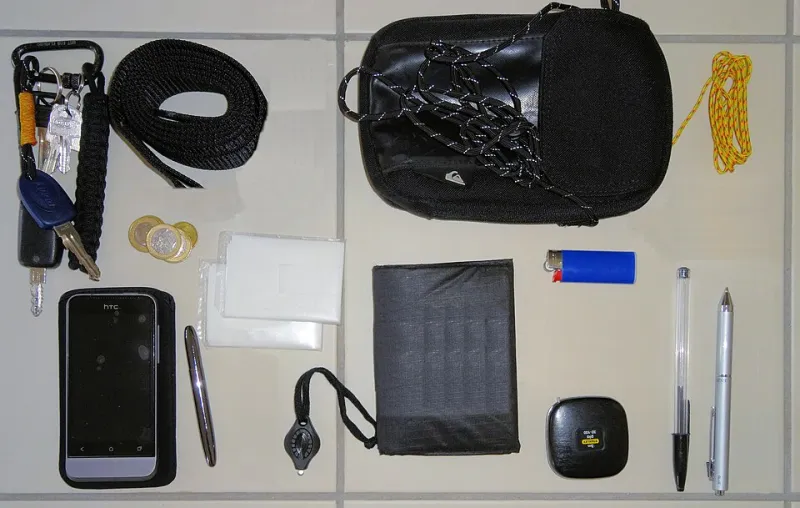
Effective self-defense does not begin at a gear store or a weapons counter—it begins with a clear-eyed look at what surrounds you right now. From the pen in your shirt pocket to the belt around your waist, ordinary items carry genuine defensive utility when paired with the right knowledge. This article examines how trained awareness of your immediate environment can transform commonplace objects into meaningful tools for personal safety.

Winning the Fight, Losing the Case: The Civil Lawsuit Risk Every Self-Defense Practitioner Must Understand
Safety & Awareness

Winning the Fight, Losing the Case: The Civil Lawsuit Risk Every Self-Defense Practitioner Must Understand

Successfully defending yourself from a physical attack does not guarantee your legal troubles end there. Beyond criminal court, a growing number of attackers and their families are filing civil suits against defenders—and winning. Understanding this legal landscape is as essential to your personal safety strategy as any technique you learn on the mat.

Built in the Gym, Broken on the Street: Why Physical Fitness Is Not the Same as Fighting Readiness
Training Methods

Built in the Gym, Broken on the Street: Why Physical Fitness Is Not the Same as Fighting Readiness

Being strong, fast, or physically fit can create a dangerous illusion of preparedness when it comes to genuine self-defense situations. The biomechanics of a real attack, combined with the neurological chaos of an adrenaline surge, expose critical gaps that no barbell or treadmill can close. Understanding these gaps is the first step toward training that actually protects you.

Think Like a Pro: Borrowing the Threat Assessment Tactics of Professional Security Personnel
Training Methods

Think Like a Pro: Borrowing the Threat Assessment Tactics of Professional Security Personnel

Professional bodyguards and executive protection specialists operate with a level of situational discipline that most civilians never develop—yet the core principles behind their effectiveness are entirely transferable. This article breaks down the methodologies that define elite personal protection work and translates them into concrete habits any motivated individual can build into their daily life. If you want to move through the world more safely, studying how the professionals do it is one

Trained but Unprepared: Why Stress Hormones Can Hijack Your Best Techniques
Training Methods

Trained but Unprepared: Why Stress Hormones Can Hijack Your Best Techniques

You have drilled the technique hundreds of times. Your form is clean, your timing is sharp, and your instructor has signed off on your execution. So why do skilled practitioners sometimes freeze or fumble when a genuine threat materializes? The answer lives in the chemistry of your own nervous system — and understanding it is the first step toward fixing it.

Improvised Defense: Turning What You Already Carry Into a Personal Safety Advantage
Training Methods

Improvised Defense: Turning What You Already Carry Into a Personal Safety Advantage

You are rarely as unarmed as you think. From the pen in your shirt pocket to the water bottle in your bag, ordinary objects can serve as meaningful defensive tools when you understand how to use them properly. This guide explores the principles behind improvised defense and how to integrate environmental awareness into your everyday self-defense mindset.

Danger in the Daily Grind: A Commuter's Field Guide to Personal Security
Safety & Awareness

Danger in the Daily Grind: A Commuter's Field Guide to Personal Security

Your daily commute is one of the most predictable—and therefore exploitable—patterns in your life. From the parking garage to the subway platform, repeated routines create windows of vulnerability that require deliberate, practiced security habits. This guide breaks down threat assessment and formation-based positioning strategies for every mode of transit.

Reading the Room: How to Identify Pre-Attack Signals Before a Situation Turns Violent
Safety & Awareness

Reading the Room: How to Identify Pre-Attack Signals Before a Situation Turns Violent

Violence rarely emerges without warning. Trained professionals know how to read the subtle behavioral shifts, body language cues, and environmental changes that precede physical confrontation—and so can you. This guide breaks down the observable indicators that can give you the seconds you need to create distance or escape entirely.

When the Threat Follows You Home: Managing the Crossover Between Online Harassment and Physical Safety
Training Methods

When the Threat Follows You Home: Managing the Crossover Between Online Harassment and Physical Safety

Digital threats are no longer confined to screens. Cyberstalking, doxxing, and coordinated online harassment increasingly translate into real-world danger—and most people are unprepared for the moment that boundary disappears. This article outlines a comprehensive, actionable framework for securing your digital footprint while reinforcing your personal safety protocols on the ground.

Your Life, Your Plan: A Step-by-Step Framework for Building a Self-Defense Strategy Around Your Real Daily Routine
Safety & Awareness

Your Life, Your Plan: A Step-by-Step Framework for Building a Self-Defense Strategy Around Your Real Daily Routine

Generic self-defense advice rarely accounts for the specific environments, habits, and vulnerabilities that define your actual life. A meaningful personal safety strategy starts not with a technique but with an honest assessment of where you go, how you get there, and what your real risk landscape looks like—then builds outward from there.

Earned Confidence: The Measurable Psychology Behind What Self-Defense Training Actually Does to Your Mind and Body
Training Methods

Earned Confidence: The Measurable Psychology Behind What Self-Defense Training Actually Does to Your Mind and Body

Self-defense training produces changes in the brain and body that go far deeper than learning a wrist release or a palm strike. Research into threat perception, stress inoculation, and behavioral cues reveals why trained individuals carry themselves differently—and why that difference genuinely matters when personal safety is on the line.

Raising Alert, Not Anxious: A Parent's Practical Roadmap for Teen Situational Awareness
Safety & Awareness

Raising Alert, Not Anxious: A Parent's Practical Roadmap for Teen Situational Awareness

Teaching teenagers to recognize and respond to potential threats is one of the most valuable gifts a parent can offer — but the line between empowerment and anxiety is narrower than many realize. This guide provides age-appropriate, practical strategies for building genuine situational awareness in teens without turning safety into fear.

Wired to Freeze: Understanding Your Brain's Crisis Response and Training to Override It
Training Methods

Wired to Freeze: Understanding Your Brain's Crisis Response and Training to Override It

When danger strikes, your brain may betray you before your body ever has a chance to act. Understanding the neuroscience behind the freeze response is not a weakness to acknowledge — it is the first step toward building training methods that actually work when it matters most.

Know Before You Act: Navigating Self-Defense Laws Across the United States
Safety & Awareness

Know Before You Act: Navigating Self-Defense Laws Across the United States

Understanding the legal framework surrounding self-defense is as essential as any physical technique you train. From stand-your-ground statutes to duty-to-retreat requirements, the rules governing defensive force vary significantly by state — and ignorance of those rules can lead to serious criminal consequences. This guide breaks down what every American should know before relying on self-defense as a legal justification.

Beyond Basic Moves: A Research-Backed Approach to Self-Defense Training for Women
Training Methods

Beyond Basic Moves: A Research-Backed Approach to Self-Defense Training for Women

Women face a distinct set of safety risks that generic self-defense curricula often fail to address. Drawing on crime statistics, behavioral research, and expert instruction, this article examines the specific threat patterns most likely to affect women and outlines training methodologies that are actually effective — not just theoretically sound. If you are serious about building real protective capability, this is where to start.

Your Mouth Is Your First Weapon: Mastering De-Escalation as a Self-Defense Skill
Safety & Awareness

Your Mouth Is Your First Weapon: Mastering De-Escalation as a Self-Defense Skill

Most self-defense conversations jump straight to strikes, holds, and physical technique — but the most effective practitioners know that the fight you avoid is the fight you have already won. De-escalation, situational awareness, and threat assessment are not soft skills reserved for conflict resolution seminars; they are tactical tools that belong at the center of every American's personal safety training. Here is why, and how to start developing them today.

Stronger Together: How Group Training Builds the Self-Defense Skills Solo Practice Never Can
Training Methods

Stronger Together: How Group Training Builds the Self-Defense Skills Solo Practice Never Can

Training alone in front of a mirror has its place, but it cannot replicate the unpredictability, pressure, and accountability that come with group self-defense practice. Discover why community-based training produces sharper reflexes, deeper muscle memory, and the kind of real-world confidence that isolated repetition simply cannot manufacture. Formation Self Defense breaks down the science and strategy behind training with others.