The Mirror Never Resists: Auditing Your Solo Self-Defense Practice Before Bad Habits Set In
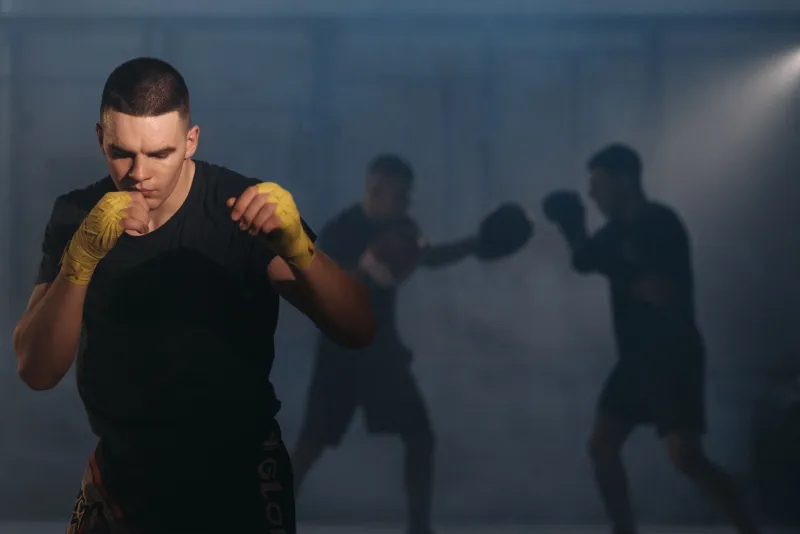
The rise of home-based martial arts practice has been one of the defining shifts in American self-defense culture over the past decade. Streaming tutorials, mobile apps, and shadowboxing drills in suburban garages have made training more accessible than at any point in history. But accessibility and effectiveness are not the same thing, and a growing body of coaching experience suggests that some solo practice may be actively installing flaws that are difficult to remove later.
What You Can Genuinely Build Alone
Solo training is not worthless — far from it. Certain attributes respond well to isolated practice because they don't depend on another person's behavior. Conditioning, mobility, and general athleticism fall squarely in this category. You can develop cardiovascular capacity, hip mobility, and explosive strength without a partner, and these qualities underpin everything else you do.
Technical rehearsal is another legitimate use of solo time. Throwing repetitions of a basic strike, a frame, or a defensive sprawl helps encode movement patterns. Visualization work, when done with discipline, has documented benefits for skill retention. Even weapon familiarity — drawing a personal safety tool you legally carry, checking your flashlight's switch placement — can be rehearsed alone productively.
The common thread: these skills improve through repetition against a static or imagined standard. No one is fighting back.
Where Solo Practice Quietly Fails
Problems begin the moment a technique's effectiveness depends on another human being's resistance. A punch thrown at air tells you nothing about distance management against someone moving toward you. A takedown drilled on an imaginary opponent builds timing that may not survive contact with someone who doesn't want to be taken down.
Worse, uncorrected repetition entrenches errors. Without eyes on your movement, small mechanical faults — a dropped guard, a telegraphing shoulder, an off-balance pivot — get repeated thousands of times until they feel correct. Motor learning doesn't distinguish between good habits and bad ones; it reinforces whatever you practice. A garage full of confident, flawed technique can be harder to fix than a beginner's blank slate.
There's also a psychological dimension. Solo practitioners often develop a calibrated-but-inaccurate sense of their abilities. Without ever feeling the pressure of live resistance, it's easy to overestimate readiness — a gap that only reveals itself when it matters most.
A Practical Audit Framework
Before your next basement session, run your routine through four questions:
1. Does this drill require feedback? If you can't tell whether you performed it correctly without an observer, you're guessing. Record video, but understand that video shows what happened, not whether it would work against resistance.
2. Does this skill depend on someone else's reaction? Distance management, timing entries, and escape techniques all involve a second party. These are the areas where solo practice contributes least.
3. Am I rehearsing under any stress at all? If your heart rate never rises and nothing is ever at stake, you're training a skill set that lives only in calm conditions.
4. When did a qualified person last watch me move? If the answer is "never" or "years ago," schedule an outside check — a seminar, a private lesson, even a single class at a reputable gym.
Knowing When to Find Partners
The honest answer is that most practitioners should seek live training earlier than they do. You don't need to abandon home practice or commit to a five-night-a-week gym schedule. Even one structured session per week with resisting partners — a boxing class, a judo club, a wrestling room — provides the calibration that solo work cannot.
Look for environments that balance safety with genuine pressure. A good training space lets you fail. If every drill ends with everyone succeeding, resistance is theatrical, not real. Ask prospective gyms how they introduce sparring and whether beginners are expected to participate in live scenarios within their first months.
A Hybrid Model Worth Adopting
The strongest approach treats solo and partner training as complementary rather than competing. Use home sessions to build fitness, rehearse fundamentals, and sharpen the mental side — scenario planning, decision-making, legal awareness. Use partner sessions to pressure-test, calibrate, and correct.
The garage dojo can be a valuable asset in your development. It becomes a liability only when it's the entire picture. Train alone to prepare; train with others to find out whether the preparation holds.