Ranked but Unprepared: What Your Belt Says About You in the Dojo and Nothing About You on the Street
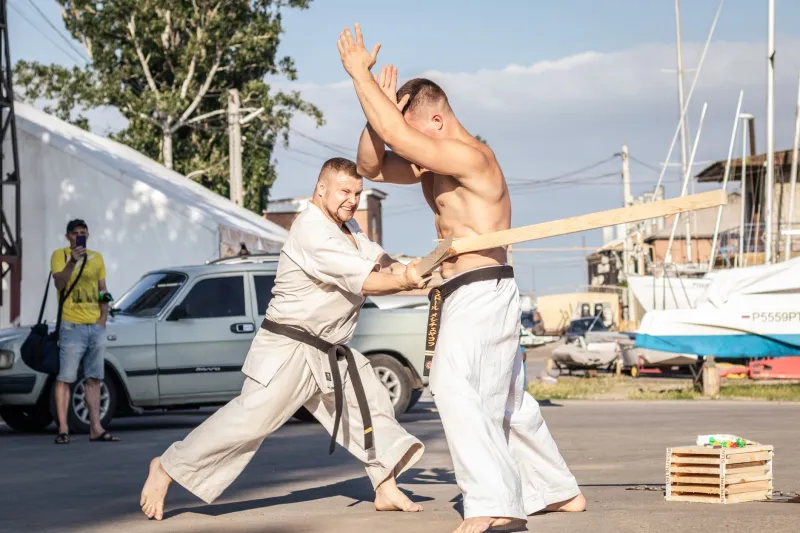
There is a moment that occurs in nearly every martial arts school across the United States. A student kneels, a new belt is tied around their waist, and the room applauds. It is a meaningful ritual — a recognition of time invested, discipline maintained, and technical skill developed. What it is not, despite how it often feels in that moment, is a certification of survival readiness.
The conflation of rank with real-world capability is one of the most persistent and potentially hazardous myths in the self-defense community. Understanding why that conflation exists, and what it costs practitioners who never question it, is essential for anyone who trains with the genuine goal of personal protection.
The Dojo Is a Laboratory, Not a Street Corner
Controlled training environments are, by design, artificial. Sparring partners follow agreed-upon rules. Attacks are telegraphed at speeds calibrated to the training level of the defender. Floors are padded. Referees intervene. Participants are sober, rested, and mentally prepared for physical contact.
Real confrontations share almost none of these qualities. Attackers do not announce their intentions clearly. They may be chemically impaired, which alters both their pain tolerance and their predictability. They frequently attack from angles and distances that structured training rarely replicates. Multiple assailants, weapons, environmental obstacles, and the presence of bystanders introduce variables that no tournament bracket ever accounts for.
When a practitioner spends years perfecting technique within the laboratory of a dojo, the nervous system learns to respond to laboratory conditions. That is not a criticism of any specific martial art — it is simply an acknowledgment of how skill acquisition works. The brain and body optimize for the environment in which they most frequently perform.
How Rank Can Build Blind Spots
Progression through a belt system is inherently a process of accumulating confidence. That confidence is largely earned and largely appropriate within its context. The problem arises when the confidence becomes detached from the context that produced it.
Advanced practitioners sometimes develop what might be called technique dependency — an over-reliance on specific moves that have been drilled to near-automatic execution. In a structured setting, that automaticity is an asset. On the street, it can become a liability. When the incoming threat does not match the shape of the threat the technique was designed to address, the highly trained practitioner may hesitate, attempting to force-fit a refined response onto a situation that demands improvisation.
Less experienced individuals, paradoxically, sometimes fare better in chaotic encounters precisely because they have no ingrained technique to misapply. They respond instinctively, without the interference of a mental catalog of "correct" responses competing for selection under extreme stress.
This is not an argument for training less. It is an argument for training differently — and for remaining honest about what any given training methodology actually prepares you for.
The Ego Dimension
Belt rank carries social weight inside martial arts communities. That social weight can quietly reshape how a practitioner perceives threat and responds to conflict. A black belt who backs away from a verbal confrontation may feel a pressure — internal or perceived from peers — that a white belt never experiences. The rank becomes an identity, and that identity can override sound tactical judgment.
De-escalation, disengagement, and retreat are frequently the most strategically intelligent responses to a developing threat. They are also responses that a rank-conscious ego may resist. The practitioner who has spent years being recognized as capable may find it psychologically difficult to choose the option that looks, on the surface, like avoidance.
Effective self-defense is not about demonstrating skill. It is about getting home safely. Those two objectives are not always aligned, and rank-related ego can obscure that distinction in precisely the moments when clarity is most critical.
What Tournament Success Actually Measures
Competitive martial arts, at their best, develop genuine athleticism, timing, pressure tolerance, and technical precision. These are real assets. A practitioner who has competed regularly understands what it feels like to perform under elevated stress against a resisting opponent — an experience that purely form-based or kata-focused training does not provide.
However, tournament success measures performance within a defined rule set against opponents who are also operating within that rule set. Point-fighting rewards speed and precision within narrow parameters. Brazilian jiu-jitsu competition rewards ground control and submission mechanics against an opponent who is not attempting to gouge your eyes or bite. Knockdown karate develops legitimate striking power but assumes a standing, one-on-one engagement.
None of these formats are without value. All of them are incomplete as a sole preparation for the full spectrum of threats a person might encounter outside a gym.
Building Toward Genuine Competency
The practitioners who tend to perform most reliably in real-world scenarios share certain characteristics that transcend rank or style affiliation.
First, they train under conditions that approximate stress. Scenario-based training, force-on-force drills using protective equipment, and exposure to ambiguous, rapidly evolving situations build decision-making capacity that technique repetition alone cannot develop.
Second, they maintain situational awareness as a primary skill rather than a secondary afterthought. The ability to recognize a threat before it becomes physical is worth more than any technique in a practitioner's arsenal. Many confrontations that skilled individuals navigate successfully are resolved before the first strike is ever thrown.
Third, they engage honestly with their own limitations. Cross-training across disciplines, seeking out sparring partners who do not respect your rank, and deliberately placing yourself in training situations where you are the least experienced person in the room are practices that keep skill honest.
Finally, they treat legal and psychological preparedness as training priorities equal to physical technique. Knowing what constitutes legally justifiable force in your state, understanding the psychological aftermath of a violent encounter, and having a plan for the period immediately following an incident are components of genuine self-defense competency that no belt progression addresses.
Respecting the Rank Without Being Defined by It
None of this should diminish the significance of rank as a marker of dedication and technical development. Earning a black belt in any legitimate martial art represents a substantial investment of effort and time. That investment deserves respect.
What it does not deserve is uncritical deference as a measure of how safe you are in the world.
The most dangerous practitioner is not the one with the highest rank. It is the one whose training has closed the gap between what they can execute in a controlled setting and what they can execute when the environment is chaotic, the threat is unpredictable, and the consequences are real. Closing that gap requires a specific kind of intellectual honesty — the willingness to ask not just how good you are in the dojo, but how prepared you genuinely are for everything outside it.
That question is harder than any grading examination. It is also far more important.