The $28 Home Gym: Five Household Drills That Build Genuine Reaction Speed
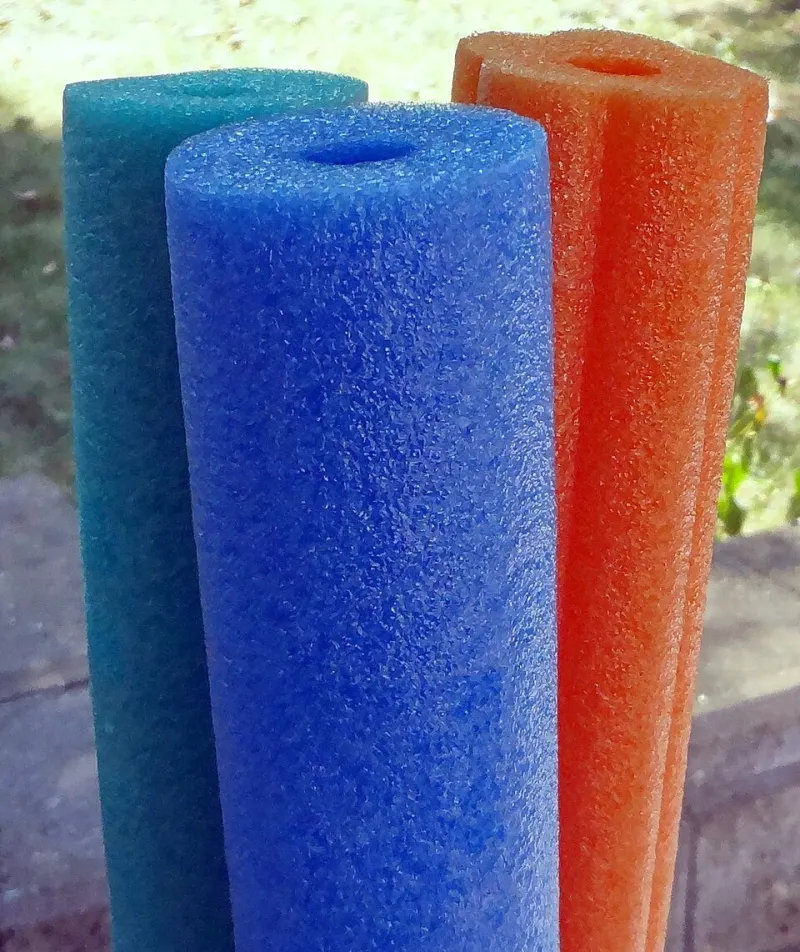
Photo: Emma Craig, CC BY 2.0, via Wikimedia Commons
Walk down the seasonal aisle of any big-box store in spring and you'll pass shelves of pool noodles selling for a dollar or two each. Most end up floating in a lake somewhere. A small number, in the homes of resourceful self-defense practitioners, become some of the best training equipment money can buy.
The core problem with solo practice is that it lacks two things: resistance and unpredictability. Shadowboxing in the air teaches mechanics, but air never swings back at you. The five drills below solve that problem with items totaling roughly $28 at a typical Walmart or Target — and each one targets a specific, measurable skill.
Drill 1: The Noodle Jab-Counter (Reaction Under Pressure)
Setup: Cut a pool noodle in half and hold one piece like a sword. Have a partner (or rig it to a door frame with a bungee cord) thrust it toward your face and torso at random intervals. Your job: slip or parry the noodle, then immediately counter with a two-punch combination.
Skill built: Recognition and reaction under incoming pressure — the exact quality that separates trained fighters from people who freeze.
Common mistake: Waiting for the noodle to arrive instead of reading the shoulder and hip movement that precedes it. Focus on the launch, not the flight.
Progression: Increase the frequency and randomness of the thrusts. Later, add a second noodle-wielding partner. When you can defend and counter against two attackers' foam weapons, real-world reactions will feel slow by comparison.
Drill 2: Tennis Ball Drop (Hand Speed and Focus)
Setup: Stand in your fighting stance, arm extended, holding a tennis ball at shoulder height. Drop it and catch it with the same hand before it bounces twice. Then progress: drop with one hand, catch with the other. Then have a partner drop it without warning while you maintain your stance.
Skill built: Hand-eye coordination and explosive hand speed, while your lower body holds a fighting posture.
Common mistake: Leaning forward and breaking your stance to make the catch. The stance is the point — the ball is just the excuse.
Progression: Shrink the reaction window by standing closer to a wall, or catch with a closed fist in a strike position rather than an open hand.
Drill 3: The Tape Line (Footwork Precision)
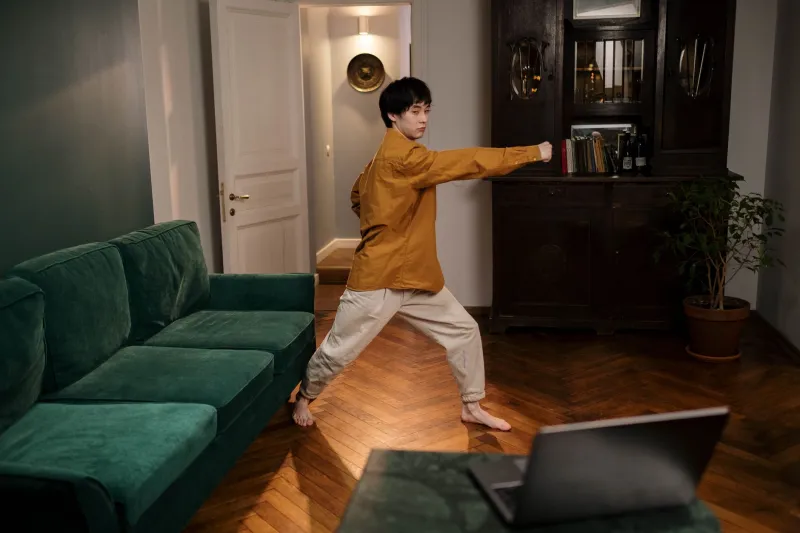
Setup: Place two strips of painter's tape on the floor in an X pattern. Start at the intersection. On a timer or a partner's call, move to a diagonal position, throw a strike, and return to center — without looking down.
Skill built: Spatial awareness and footwork without visual confirmation. On the street, the ground beneath you is unfamiliar; training your feet to know where they are is underrated protection.
Common mistake: Looking at your feet. Every glance down is a second your eyes are off the threat.
Progression: Add a ball-drop or noodle drill simultaneously, forcing your brain to manage footwork and incoming pressure at once.
Drill 4: Chair Guard (Getting Up From the Ground)
Setup: Sit in a sturdy kitchen chair. On a call, stand up explosively into your fighting stance and throw a strike. Then reverse: from standing, sit down under control while keeping your hands up.
Skill built: Transitional movement — the most neglected skill in home training. Falling or being knocked down is a realistic scenario, and the ability to get up quickly and safely is a genuine life skill for practitioners of every age.
Common mistake: Using your hands to push off your knees. Keep them up and let your legs do the work.
Progression: Time it. Ten clean get-ups in under a minute is a solid benchmark.
Drill 5: Pillow Burst (Full-Power Output)
Setup: Stack two couch pillows against a wall or the back of a heavy chair. Throw your hardest palm strikes, elbows, and knees into the stack for ten-second bursts.
Skill built: Commitment. Air strikes teach form; impact teaches the psychological willingness to hit something at full power, which many people discover they've never actually done.
Common mistake: Tapping lightly. If the pillows aren't moving, you're not committing.
Progression: Extend to five thirty-second rounds with thirty seconds of rest, tracking your output by how far the pillows slide.
Keep It Honest
Household drills are a supplement, not a substitute, for qualified instruction. But they close the gap between weekly classes in a way no amount of air-shadowboxing can. For under thirty dollars and a corner of the living room, that is a remarkable return on investment.