Footage Doesn't Lie: What Doorbell Cameras Reveal About the Way You Walk Through Doors
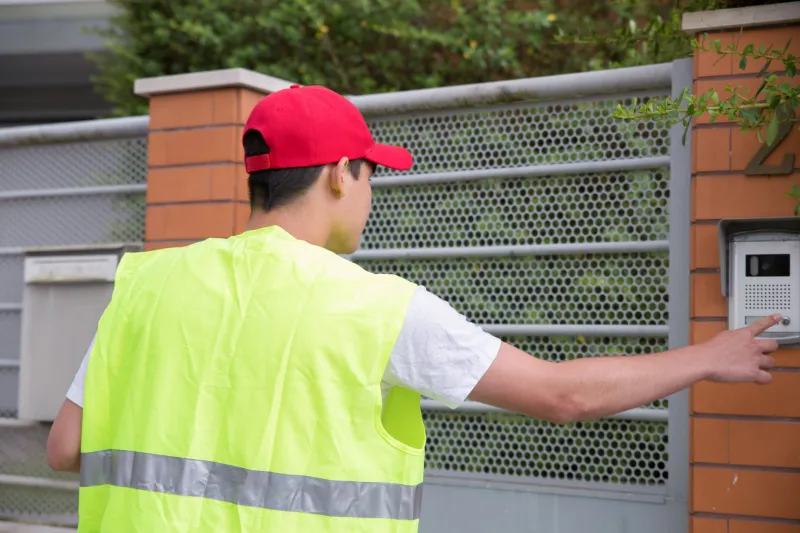
Spend an evening watching compilations of doorbell camera footage — a genre of American internet culture all its own — and a pattern emerges quickly. It is rarely the dramatic moment that gets people into trouble. It is the five seconds before it: the distracted approach, the tunnel of focus on a lock or a phone, the body turned away from the street while both hands dig through a bag.
At Formation Self Defense, we talk often about awareness as a trainable skill. Few tools illustrate this better than the humble security camera. Homeowners across the country now sit on months of footage showing exactly how they behave on approach to their own front doors. Read honestly, that footage is a free, unflattering, and extraordinarily useful audit of your entry habits.
What the Cameras Actually Capture
Review enough clips and the same behaviors repeat across neighborhoods, demographics, and regions:
- The phone lock-in. Eyes down, thumb scrolling or texting, from the car to the door. The person's visual field narrows to roughly arm's length.
- The key hunt. Standing still at the threshold, back to the street, both hands occupied, sometimes with earbuds in — a posture that eliminates sight, hearing, and mobility all at once.
- The blind entry. Doors opened and entered without a glance behind, leaving an unobstructed path for anyone following.
- The loaded approach. Groceries, packages, a child on the hip — arms full, attention consumed, the door propped open longer than necessary.
None of these behaviors is foolish in isolation. They are simply habits, repeated without thought. That is precisely why they matter: an experienced predator, whether a package thief or something worse, is reading for exactly these cues. Security researchers and law enforcement officials who study residential crime consistently note that opportunistic offenders select targets that look inattentive, isolated, and slow to react — a description that fits a distracted person fumbling at a door almost perfectly.
The Five-Second Window
Why do we keep returning to five seconds? Because that is roughly the span between leaving a protected space — your car, a lit storefront, a rideshare — and crossing into the next one. In that gap, you are transitional: visible, predictable in your route, and mentally elsewhere. It is the most vulnerable stretch of an ordinary day, and almost nobody trains for it.
The good news is that the fix is procedural, not athletic. You do not need fighting skill to walk to your door well. You need a routine, rehearsed until it runs on autopilot.
Drills That Rewrite the Routine
The Head Check at the Threshold
Before you reach for keys, stop. Turn your head — a genuine scan, left to right, covering the street and both approaches. Two seconds. Then handle the lock. Practice this until the scan happens before the keys, every time, without conscious decision. A deliberate pause at the door is also a deterrent in itself; people who look around are harder to approach covertly.
Keys Before the Walk
Digging for keys at the door is a self-inflicted vulnerability. Make it a rule: keys are out and in hand before you leave any vehicle or building. Better yet, practice holding your largest key between your ring and middle fingers as you walk — not as a weapon, but so the lock can be worked instantly and a hand is never empty.
The Parking Lot Approach
In parking structures and lots, apply the same logic on the return trip. Scan the car's interior and back seat before entering, keys ready, bag set down first if it must go inside the cabin. Enter, lock immediately, then arrange yourself. The order matters — most people sit, lock, then fumble, spending ten exposed seconds doing nothing at all.
Rideshare Verification
Confirm the plate and driver description before the door opens, sit behind the driver rather than beside, and keep your own exit route in mind for the whole ride. These small checks, borrowed from rideshare company safety guidance, take seconds and remove the ambiguity that opportunists rely on.
Making It Stick
Habits are built through repetition under mild variety, not through a single dramatic resolution. Run the threshold scan thirty times in a week — at your home, at work, at the gym — and it will begin to fire on its own. If you have a doorbell camera, use it as feedback: pull a week of your own approach clips and grade yourself honestly. Most people are surprised by what they see.
Self-defense, at its foundation, is not a collection of techniques but a set of defaults. The five seconds at your front door are where those defaults are tested daily. Train the entry, and you have trained the habit that protects everything behind it.