The Ninety-Second Gap: How Transitional Spaces Undermine Your Awareness and What to Do About It
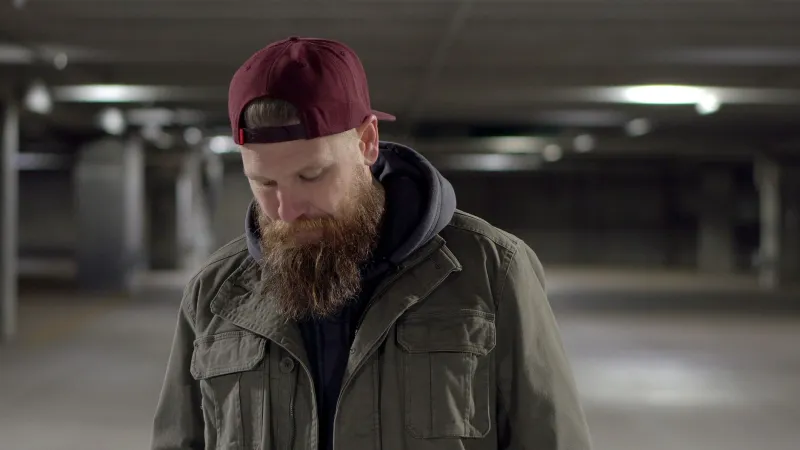
Ask most people where they picture an assault happening, and they will describe a dark alley or a deserted street at 2 a.m. The data tells a different story. Violent encounters in the United States cluster disproportionately in the mundane in-between places: the parking structure after work, the gas station pump at dusk, the stairwell leading to a third-floor apartment, the thirty feet of sidewalk between the car and the front door.
These locations share a defining feature. They are transitions, and transitions are where the human brain goes offline.
Why the Mind Goes Idle Mid-Route
Situational awareness is not a fixed trait; it is a resource that fluctuates with mental load. Psychologists call the phenomenon attentional tunneling, and it is amplified by exactly the conditions transitional spaces create. You are navigating keys, a phone, a bag, a garage ticket, maybe children. You are also mentally shifting gears—replaying the meeting you just left or rehearsing the conversation ahead.
Criminologists studying opportunistic violence consistently note that offenders select targets based on observable cues, not chance. A person fumbling at the keyhole, face buried in a screen, headphones in, in a location with limited sightlines and quick exit routes, presents what researchers describe as a low-effort, low-risk proposition. The transitional space does not create the threat. It concentrates it.
Consider the anatomy of a typical parking garage visit. You exit your vehicle with your hands full, your back partially to foot traffic, enclosed by concrete pillars that block sightlines, in a space designed for cars rather than people. Multiply that by the gas station stop, the ATM withdrawal, the walk from a rideshare drop-off. Each is a ninety-second window in which your defensive posture is at its weakest.
The Micro-Habits That Shrink the Window
The good news is that closing this gap does not require paranoia or a tactical lifestyle. It requires a short list of deliberate habits practiced until they run on autopilot.
Stage your keys before you move. The single most common vulnerability in transitional spaces is the key fumble. Keep your primary key or fob in a consistent pocket—many practitioners favor the right front pocket—and draw it while still in the well-lit interior of a store or the elevator of your building, not while standing exposed at your car door. Some drivers program their remote start so the vehicle is unlocked and running before they arrive, collapsing the time spent standing at the door.
Adopt phone discipline at the threshold. Decide in advance that phones do not come out during transitions. Text at the counter before you leave, not on the walk to the car. If you must take a call, use one earbud with the other ear open, and stop walking while you talk. A stationary, head-up person reads as far less approachable to a predator than a distracted, moving one.
Reverse your arrival routine. When you park, spend five seconds scanning before you exit: Who is near your vehicle? Is a van parked alongside the driver's side? What is the route to the entrance, and does it pass blind corners? This parking lot scan costs almost nothing and gives your brain a baseline, so that anything unusual registers immediately.
Treat stairwells and porches as checkpoints. Apartment stairwells compress the same risks as garages—echo, blind landings, single exits. Take calls before you enter, keep a hand free, and listen at the door before pushing through. At home, the porch deserves equal respect: install motion lighting, have your key ready before you reach the step, and avoid the habit of standing to scroll through mail. A person locked in reading mail at their own front door is, for those ninety seconds, entirely absorbed.
Know your exits the moment you arrive. Whether it is a parking level, a gas station, or a laundromat, the first glance should locate the ways out. This is not fear; it is orientation. Security professionals do it automatically, and with deliberate practice, so can anyone.
Vigilance Without Paranoia
A frequent objection deserves an honest answer: does living this way make you anxious? Done correctly, the opposite occurs. Anxiety thrives on uncertainty and hypervigilance—the exhausting, unfocused scanning that never resolves anything. Habit-based awareness is the antidote. When your checks are scripted and automatic, your mind is free to relax between them.
Think of it the way you think about buckling a seatbelt. You do not drive in fear of a crash, but you also do not debate the decision each time you get in the car. The habit handles it. The same framework applies here: a short, repeatable routine for every transition, executed without emotional weight.
At Formation Self Defense, we teach awareness as a trainable skill rather than a personality trait. The ninety-second gap between your car and the door will always exist. What can change—with a few weeks of deliberate practice—is whether you spend those seconds present, oriented, and hard to surprise.