Think Like a Pro: Borrowing the Threat Assessment Tactics of Professional Security Personnel
What Separates a Trained Protector From a Trained Fighter
Most people assume that professional bodyguards are simply very skilled fighters. The reality is considerably more nuanced. Elite executive protection agents spend a fraction of their working hours thinking about physical confrontation. The overwhelming majority of their mental energy is directed toward a single objective: making sure a physical confrontation never occurs in the first place.
This distinction matters enormously for anyone serious about self-defense training. The popular image of a bodyguard—large, intimidating, ready to neutralize a threat on command—is a Hollywood construct. Real protective professionals are, above all else, systematic thinkers. They are trained to analyze environments, anticipate problems, and position themselves and their clients in ways that make an attack structurally difficult to execute. That shift in emphasis, from reactive fighter to proactive planner, is the single most valuable concept you can borrow from their world.
The Pre-Mission Mindset: Knowing Before You Go
Before a professional security agent accompanies a client anywhere, they conduct what the industry calls an advance. This is a deliberate reconnaissance of the environment: identifying entry and exit points, locating potential chokepoints, noting where crowds will form, and flagging any structural features that could limit escape options or provide cover for an aggressor.
For the average person, a formal advance is neither practical nor necessary. What is practical, however, is adopting the underlying habit. Before entering an unfamiliar venue—a concert hall, a parking structure, a restaurant in an unfamiliar neighborhood—take sixty seconds to observe the space with intention. Where are the exits? Where does foot traffic naturally concentrate? Where are the low-visibility corners? This is not paranoia; it is the same cognitive discipline that experienced professionals practice so consistently it becomes automatic.
Applied to daily life in American cities and suburbs, this habit transforms ordinary environments into readable spaces. The parking garage near your office, the transit station you use every week, the strip mall where you run errands—each of these has a layout that either works in your favor or against you, depending on how much attention you have paid to it.
Proxemics and the Geometry of Safety
Professional protection teams think carefully about spatial geometry. They position themselves in ways that maximize visibility, minimize blind spots, and keep their principal away from structural vulnerabilities like narrow corridors, crowded doorways, and areas where rapid movement would be obstructed.
The concept underlying this practice is called proxemics—the study of how physical space affects human behavior and interaction. Security professionals manipulate proxemics deliberately. They stand at angles rather than directly in front of or behind a client, creating a formation that allows them to observe the widest possible arc of the surrounding environment.
For individuals without a protective detail, the principle still applies. Consider your default positioning habits. Do you habitually sit with your back to the room in restaurants? Do you stand near exits or away from them? Do you allow yourself to be funneled into narrow spaces when broader routes are available? Small, consistent adjustments to where and how you position yourself in public spaces can meaningfully reduce your exposure to opportunistic threats. Seat yourself with a wall behind you and sightlines across the room. Avoid clustering near entrances during high-traffic moments. When walking, maintain enough lateral space to change direction without obstruction.
The Threat Funnel: How Professionals Triage Risk
One of the most transferable concepts from executive protection training is what practitioners sometimes call threat funneling—the practice of mentally sorting environmental stimuli into categories of relevance and urgency. A professional agent is not simply watching everything at once; they are running a continuous, prioritized assessment of what in their environment represents a credible concern versus background noise.
This skill is trainable. It begins with establishing a personal baseline for any given environment. What does normal look like here? What is the typical pace of movement, the expected noise level, the ordinary pattern of behavior? Once that baseline is internalized, anomalies become detectable. A person moving against the flow of foot traffic, someone whose gaze lingers longer than social norms would explain, an individual whose clothing is inconsistent with the weather or setting—these are the kinds of signals that experienced professionals notice because they have trained themselves to recognize deviation from baseline.
This is precisely the discipline covered in situational awareness training, and it is one of the foundational competencies developed in structured self-defense programs. The difference between a trained observer and an untrained one is not raw intelligence—it is the habit of deliberate attention.
Protective Formation Thinking for Everyday Life
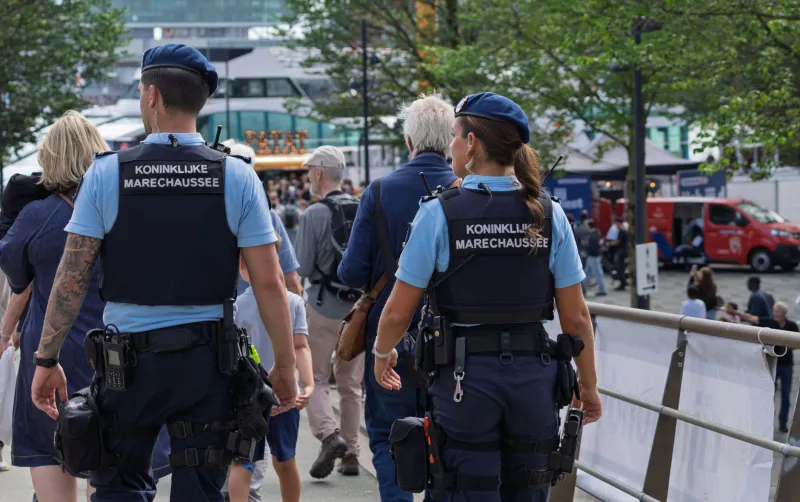
Executive protection teams use formations—deliberate spatial arrangements of multiple agents around a principal—to create layered buffers against threat. You are unlikely to move through your day surrounded by a security detail. But the concept of formation thinking scales down effectively.
Consider how you move through public spaces with family members or friends. Are the most vulnerable individuals—children, elderly relatives, anyone with limited mobility—positioned where they are most exposed to passing traffic or crowd surges? Formation thinking, applied casually, means making small, habitual choices about who walks where, who enters a space first, and who maintains the clearest sightline to the surrounding environment. It requires no special equipment and no dramatic change in behavior. It simply requires intention.
Parents, in particular, benefit from thinking this way. Walking with children through a crowded fairground, a busy parking lot, or an unfamiliar urban neighborhood is an opportunity to apply protective positioning instinctively. Keep children on the interior of the sidewalk, away from traffic. Maintain physical contact in high-density crowds. Identify a rally point before entering a venue in case separation occurs.
Training the Professional Mindset
The techniques described here are not advanced tactics reserved for elite operators. They are disciplined habits built through repetition and intention. Professional security personnel train these behaviors until they become reflexive—until the advance scan of a new environment happens automatically, until threat funneling operates as a background process rather than a conscious effort.
For the self-defense practitioner, the lesson is clear: physical technique is only one dimension of personal safety. The professionals who spend their careers keeping others safe invest heavily in the cognitive and observational skills that prevent physical confrontations from materializing. Integrating those same skills into your own training regimen—through scenario-based drills, structured awareness exercises, and deliberate environmental observation—elevates your personal security capability in ways that sparring alone cannot.
Forming good habits starts with understanding what good habits look like. In this case, the professionals have already done the work of defining them. The remaining task is simply to adopt them as your own.