Trained but Unprepared: Why Stress Hormones Can Hijack Your Best Techniques
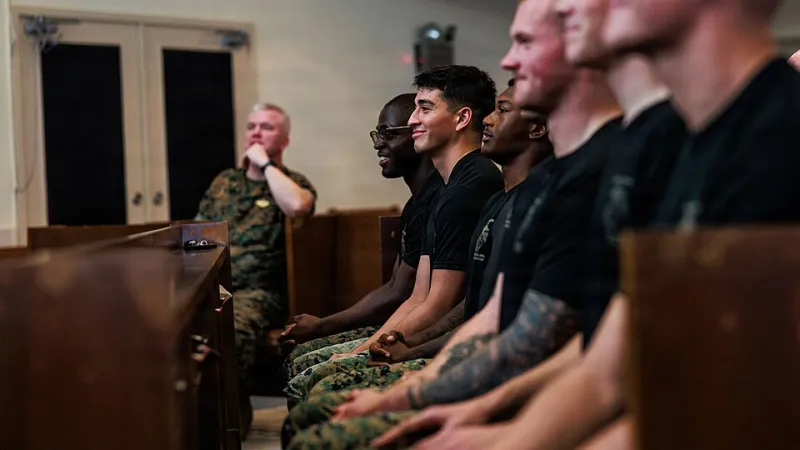
Photo: U.S. Marine Corps photo by Cpl. Justin Cledera, Public domain, via Wikimedia Commons
The Illusion of Readiness
There is a particular kind of false confidence that can develop in a training environment, and it is more dangerous than no confidence at all. A practitioner who has drilled a wrist-release escape or a rear-choke defense several hundred times in a well-lit gym, against a cooperative partner, with soft mats underfoot, has accomplished something real. But they have not yet accomplished the thing that matters most: the ability to execute that same technique when their heart is hammering at 170 beats per minute, a stranger's breath is on their neck, and their prefrontal cortex has essentially gone offline.
This is not a commentary on effort or dedication. It is a neurological reality that affects everyone from first-year students to seasoned competitors, and ignoring it produces practitioners who are technically proficient in controlled conditions and dangerously brittle everywhere else.
What Stress Actually Does to a Moving Body
When the brain perceives genuine threat — not the polite, scheduled threat of a sparring session, but the sudden, ambiguous threat of a real-world confrontation — it initiates a cascade of physiological changes that most training programs simply do not account for.
Adrenaline and cortisol flood the bloodstream within seconds. Blood is rerouted away from the extremities and toward the large muscle groups needed for running or gross motor combat. Fine motor skills, the precise finger positioning, the subtle weight transfers, the controlled hip rotation that make technical strikes effective, begin to degrade almost immediately. Research from law enforcement training contexts has repeatedly documented this phenomenon: officers who qualify perfectly on static shooting ranges show measurably reduced precision when placed in dynamic, threat-present scenarios, even when the firearm handling involved is identical.
Tunnel vision is another underappreciated factor. Under acute stress, peripheral awareness collapses. The brain locks attention onto the perceived source of danger and filters out contextual information that might otherwise inform a measured response. A practitioner who has learned to scan for secondary threats during training will often fail to do so when the neurochemical environment shifts to genuine alarm.
Perhaps most critically, the motor cortex — the region responsible for executing learned movement patterns — does not operate in isolation. It is heavily influenced by the emotional and threat-processing centers of the brain, particularly the amygdala. When the amygdala fires at full intensity, it can interrupt the clean retrieval of even well-established motor programs. This is not a character flaw. It is the architecture of a nervous system that evolved to prioritize survival over technique.
Why Conventional Drilling Falls Short
Standard repetition-based drilling builds what researchers call "procedural memory" — the ability to execute a movement without conscious deliberation. This is genuinely valuable. Automaticity reduces reaction time and frees cognitive bandwidth. The problem is that procedural memory formed exclusively in low-stress conditions becomes indexed to those conditions.
In cognitive science terms, memory is context-dependent. What you learn in a calm gym is most reliably retrieved in a calm gym. The neurochemical environment of actual threat is sufficiently different that retrieval pathways can degrade or fail entirely. This is sometimes described as "state-dependent learning," and it explains why a practitioner can feel the technique "disappear" in a moment of genuine fear even though they could demonstrate it perfectly an hour earlier.
Conventional drilling also tends to be highly predictable. Both partners know what is coming. The attacker telegraphs the grab or strike. The defender prepares mentally before contact is made. This cooperative dynamic produces clean technique, but it also produces a nervous system that has never been asked to access that technique under conditions of genuine surprise and elevated arousal.
Building Muscle Memory That Actually Transfers
The good news is that this gap is trainable. The methods required are more demanding than standard drilling, but they are well-documented and increasingly accessible in quality training programs across the United States.
Stress Inoculation Through Scenario-Based Training
Stress inoculation is a term borrowed from military and law enforcement preparation. The underlying principle is straightforward: by repeatedly exposing the nervous system to controlled but genuinely stressful scenarios, practitioners gradually raise their arousal threshold and maintain greater access to technical skill under pressure.
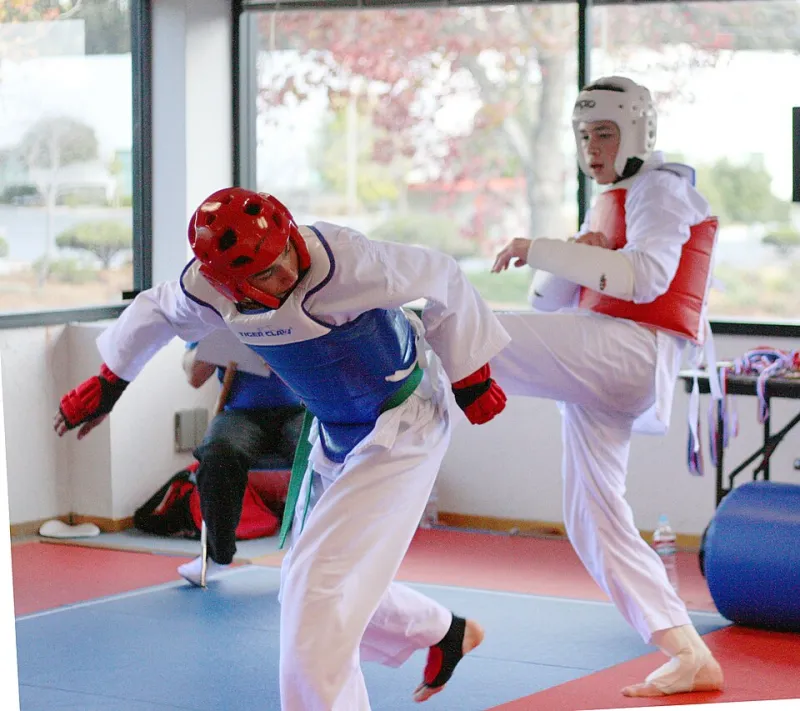
This can be implemented progressively. Early stages might involve performing techniques immediately after a brief period of intense physical exertion — burpees, sprints, or heavy bag work — to simulate elevated heart rate. More advanced stages introduce surprise initiation, where the practitioner does not know when or from what angle contact will come. The most sophisticated implementations involve scenario role-play with padded attackers, environmental variables, and ambiguous initiation cues that force the practitioner to both identify the threat and respond to it.
Variable-Stimulus and Randomized Drilling
The antidote to predictable drilling is deliberate unpredictability. Variable-stimulus drills require the practitioner to respond to different attack types in random sequence, without advance knowledge of what is coming. This forces the nervous system to develop genuine recognition-response pathways rather than simply pattern-matching to a known cue.
A well-designed variable drill might present a grab, a push, a verbal threat, or no attack at all within a single session, requiring the practitioner to assess and respond in real time. This approach builds what some researchers call "adaptive" rather than "brittle" technique recall — the ability to access learned movements across a wider range of activating conditions.
Pressure Testing Against Resistance
At some point in training, techniques must be tested against a partner who is not cooperating. This does not mean uncontrolled sparring with no safety considerations. It means introducing progressive resistance, where the partner begins to offer realistic pushback, change angles, and respond dynamically. Techniques that survive this kind of pressure are far more likely to transfer to real-world conditions than those that have only ever been executed against a compliant training partner.
A Note on Training Culture
Implementing these methods requires a training environment where honest feedback is valued over comfort, and where the goal of genuine preparedness takes precedence over the performance of technical perfection. Some practitioners and programs resist this kind of pressure testing because it reveals gaps. That discomfort is precisely the point.
The formation of reliable self-defense capability is not a performance for the gym. It is a preparation for conditions that are, by definition, outside the gym. Closing the gap between controlled competence and genuine threat response is the central challenge of serious self-defense training — and it begins with an honest acknowledgment that drilling alone, however diligent, is not enough.