Earned Confidence: The Measurable Psychology Behind What Self-Defense Training Actually Does to Your Mind and Body
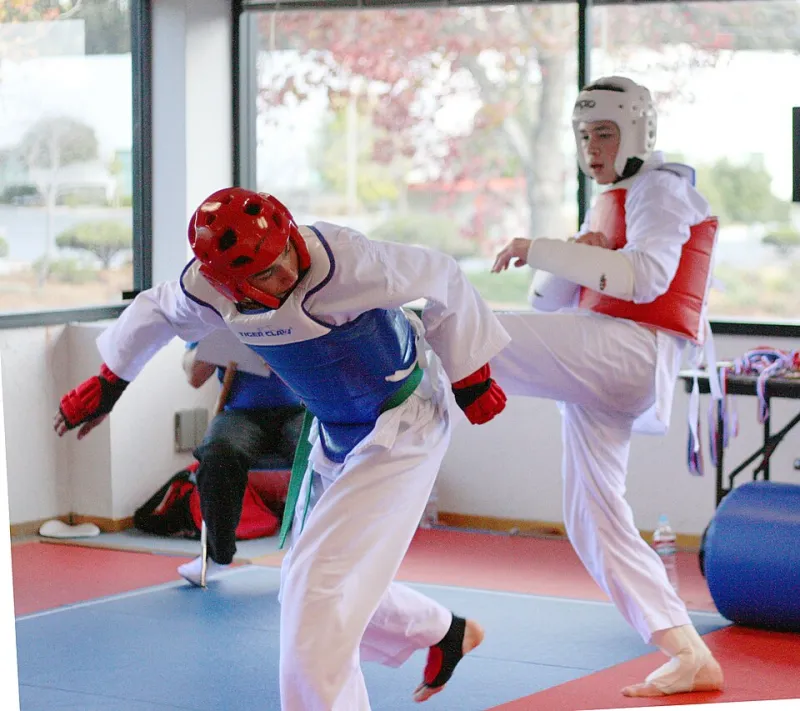
Photo: Richard Masoner / Cyclelicious, CC BY-SA 2.0, via Wikimedia Commons
The Problem With "Fake It Till You Make It"
Confidence is one of the most frequently cited benefits of self-defense training, yet it is also one of the most misunderstood. Popular culture tends to conflate two very different states: genuine competence-based confidence and performative bravado. The distinction is not merely philosophical—it has direct implications for personal safety.
Bravado is compensatory. It tends to emerge when someone perceives a gap between their self-image and their actual capability, and it often manifests as overestimation of one's ability to handle a threat. Genuine confidence, by contrast, is calibrated. It arises when a person has accumulated real experience navigating stressful situations and has developed an accurate internal map of what they can and cannot manage. Self-defense training, when practiced consistently and intelligently, builds the second kind—and the science behind that process is more compelling than most practitioners realize.
What Stress Inoculation Actually Does to the Nervous System
One of the foundational mechanisms through which quality self-defense training builds authentic confidence is a process researchers call stress inoculation. The concept originated in clinical psychology but has since been studied extensively in military, law enforcement, and athletic contexts.
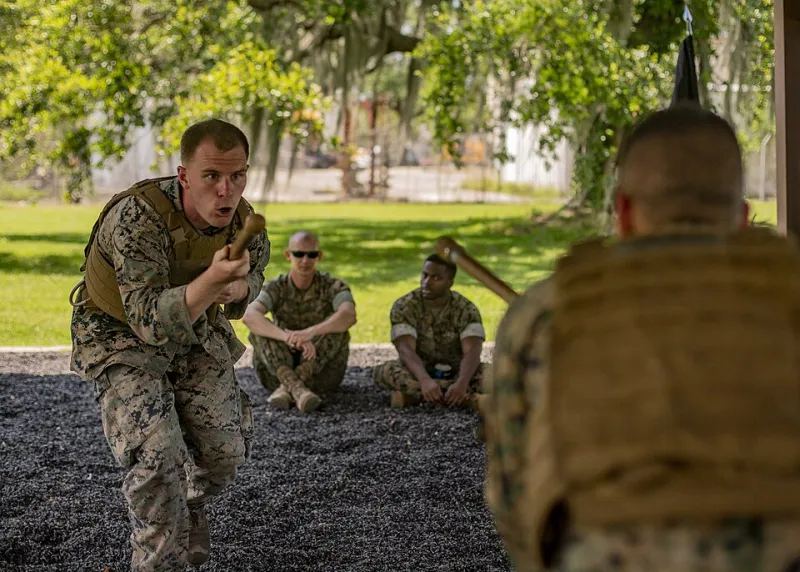
When you train under simulated pressure—whether through sparring, scenario-based drills, or high-intensity pad work—your body activates the same hormonal cascade it would during an actual confrontation: elevated cortisol, a surge of adrenaline, increased heart rate, and the narrowing of attentional focus. Repeated, controlled exposure to that state does something remarkable. The nervous system begins to treat the response as familiar rather than catastrophic. The physiological reaction does not disappear, but the cognitive experience of it shifts. Where a first-time student might interpret a racing heartbeat as panic, a trained practitioner begins to read the same sensation as readiness.
This recalibration has been documented in studies examining police cadets, combat sport athletes, and participants in structured self-defense programs. Across these populations, repeated stress exposure under controlled conditions correlates with faster decision-making, reduced perceived threat intensity, and improved performance under pressure over time.
Threat Perception: Why Trained Eyes See the Room Differently
Confidence is not only an internal experience—it is also an information-processing advantage. Research in cognitive psychology consistently demonstrates that trained individuals perceive and categorize environmental threats more efficiently than untrained counterparts.
A 2010 study published in Psychological Science found that individuals who perceived themselves as physically capable—based on actual physical training rather than self-report alone—consistently underestimated the steepness of hills and the distance to potential hazards. The researchers interpreted this as evidence that physical capability changes the brain's environmental modeling. When your body has demonstrated that it can respond, your perceptual system assigns less threat weight to ambiguous stimuli.
For self-defense practitioners, this translates into a measurable shift in situational awareness. Students who have trained for six months or more frequently report noticing exits, positioning relative to others, and behavioral anomalies in public spaces that they previously overlooked entirely. This is not hypervigilance—it is calibrated attention, and it is one of the clearest markers separating earned confidence from manufactured bravado.
The Body Language Effect: How Training Changes What Others See
Here is where the science becomes particularly relevant to personal safety: confidence developed through training does not stay internal. It expresses itself in posture, gait, eye contact, and spatial behavior—and that expression matters to potential aggressors.
Criminological research, most notably the work of Betty Grayson and Morris Stein in the 1980s, established that convicted violent offenders could identify vulnerable targets from brief video clips with striking consistency. The cues they used were almost entirely nonverbal: stride length, postural alignment, directness of gaze, and the degree to which a person appeared present in their environment rather than distracted or inward-focused.
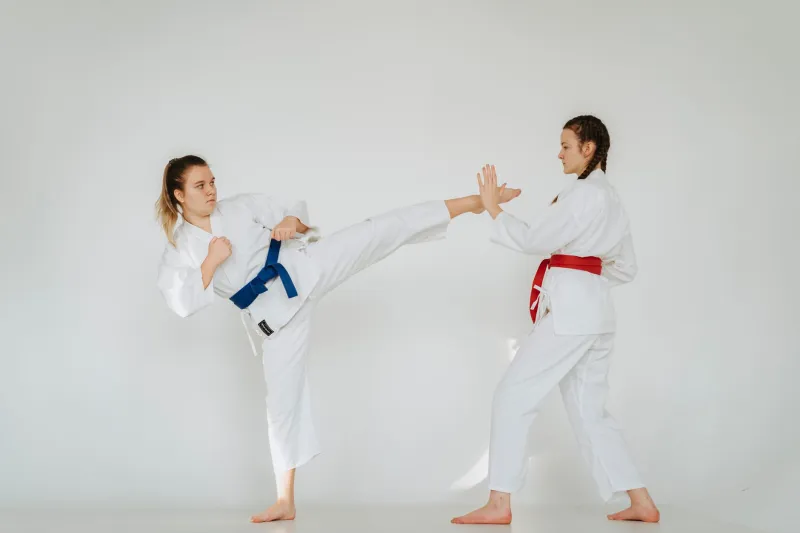
Subsequent research has replicated and expanded these findings. What is particularly significant for self-defense practitioners is that the behavioral markers associated with low vulnerability are precisely the markers that develop through consistent physical training. Improved posture emerges from core strength and body awareness. Directional gaze develops from sparring and environmental scanning drills. Purposeful movement is a byproduct of learning to move intentionally under pressure. Training does not simply teach you to fight—it teaches your body to signal capability, and that signal functions as a deterrent.
How to Measure Your Own Progress
One of the most practical questions a self-defense student can ask is: how do I know if my training is producing genuine confidence rather than an inflated sense of security? Several concrete indicators can help answer that question honestly.
Stress response familiarity. After several months of consistent training, pay attention to how your body responds during high-pressure drills. If the physical sensations of stress—elevated heart rate, tunnel vision, muscle tension—feel progressively less disorienting, your nervous system is adapting appropriately.
Decision latency under pressure. In scenario-based training, measure how quickly you commit to a response when a situation is ambiguous. Decision speed under simulated stress is a reliable proxy for how you are likely to perform in a genuine encounter. Improvement over time is a meaningful signal.
Environmental awareness baselines. Periodically test yourself. After entering a new space—a restaurant, a parking structure, a transit platform—note how many exits you identified, whether you registered unusual behavior, and how long it took you to establish a mental picture of the room. Tracking this informally over months reveals whether your attentional habits are genuinely shifting.
Behavioral feedback from others. This one requires trusted observers, but it is valuable. People who train consistently often receive unsolicited feedback that they seem more assured, more present, or harder to rattle. These observations, when they come from people who did not know you before training, carry real weight.
The Honest Caveat
None of this is an argument for overconfidence. One of the most important things genuine training teaches is the scope of what you do not yet know. Experienced practitioners tend to be more measured, not less, in their assessment of what they could handle in a real encounter. That measured quality is itself a product of earned confidence—the kind that acknowledges limits rather than inflating them.
At Formation Self Defense, we hold that the goal of training is not to produce invincibility. It is to produce a version of you that is harder to surprise, harder to intimidate, and better equipped to make sound decisions when the environment becomes unpredictable. The research supports that goal. The work, as always, is yours to put in.